


Ventilator Ambulance Service in Pakistan: Safe ICU Patient Transfer Guide
Ventilator Ambulance Service in Pakistan: Safe ICU Patient Transfer Guide
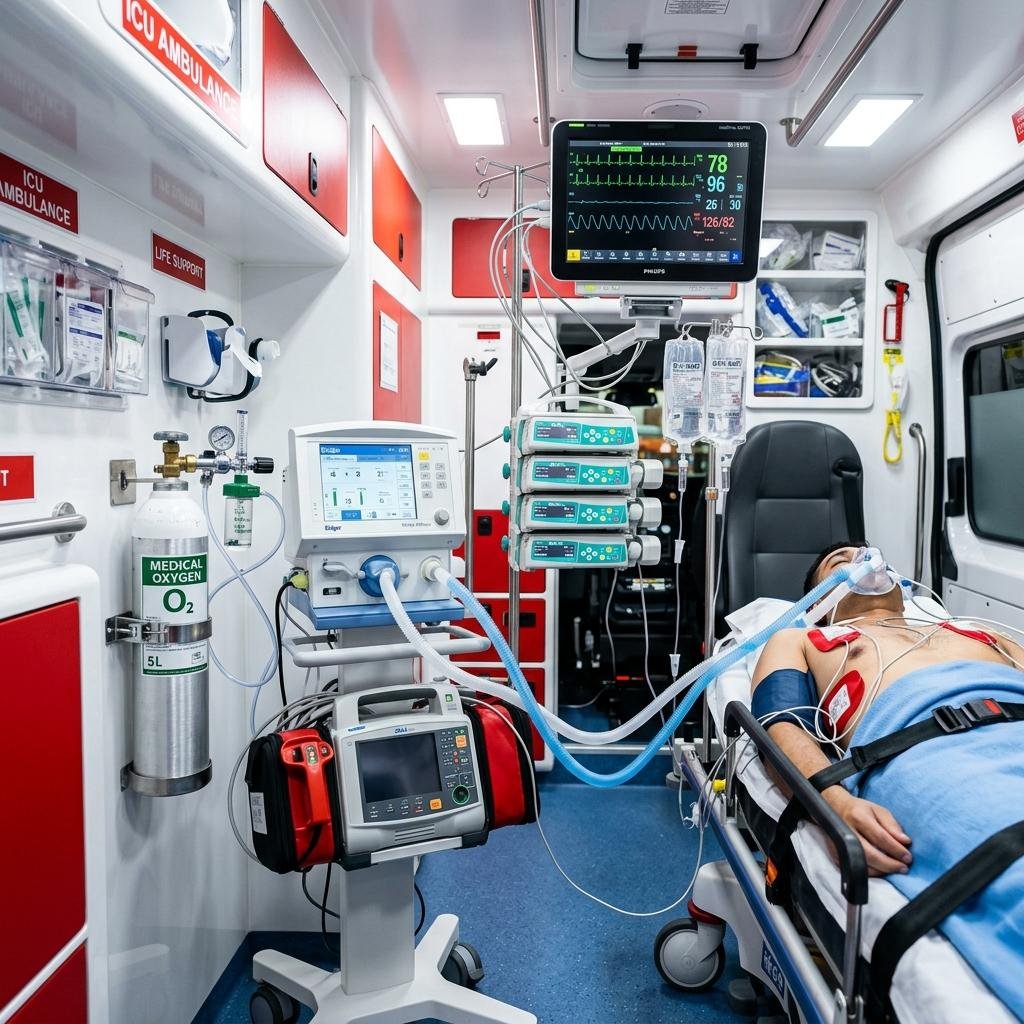
When a patient is critically ill and requires breathing support, arranging transportation can be challenging for family members. A regular vehicle may not provide the equipment or medical assistance needed during the journey.
A ventilator ambulance service in Pakistan can help arrange medical transportation for patients who require respiratory support and specialized care while travelling between hospitals, healthcare facilities, or home and hospital.
At Fatima Ambulance Service, we provide medical transportation solutions for patients and families who need assistance with hospital transfers and long-distance journeys. Our team can help you understand the arrangements required for your patient’s transfer.
If you are looking for a private ambulance service in Pakistan, this guide explains what a ventilator ambulance is, when it may be needed, and what to consider before booking.
What Is a Ventilator Ambulance?
A ventilator ambulance is a specially equipped medical transport vehicle designed to transport patients who require mechanical breathing support during their journey.
Depending on the vehicle and medical arrangements, it may include:
- A medical ventilator for patients who require assisted breathing.
- Oxygen support equipment.
- Patient monitoring equipment.
- A stretcher and patient handling equipment.
- Medical personnel appropriate to the patient’s condition.
Equipment and staff availability can vary between ambulance providers. Always confirm the exact facilities available before booking.
When Is a Ventilator Ambulance Required?
A ventilator ambulance may be considered when a patient cannot safely travel in a regular vehicle because they require respiratory support or continuous medical supervision.
Common situations may include:
1. ICU-to-ICU Patient Transfer
A patient may need to move from one hospital’s intensive care unit to another facility for further treatment, specialist care, or access to specific medical services.
The sending and receiving medical teams should coordinate the transfer and determine the level of support required during transportation.
2. Hospital-to-Home Transfer
Some patients are discharged from the hospital while still requiring respiratory support or specialized care.
In such cases, a medically planned transfer may be necessary. The treating doctor should confirm whether a ventilator ambulance is appropriate and what equipment and staff are required.
3. Intercity Medical Transportation
Families sometimes need to move a patient from one city to another for treatment or follow-up care.
For long-distance journeys, it is important to plan the route, journey duration, oxygen requirements, equipment power supply, and medical support in advance.
What Is Included in a Ventilator Ambulance?
The facilities available depend on the ambulance provider, vehicle, and patient’s medical needs.
Before booking, ask whether the following are available:
| Facility | Why It Matters |
|---|---|
| Ventilator | For patients requiring mechanical breathing support |
| Oxygen supply | For patients who require supplemental oxygen |
| Patient monitor | To monitor relevant vital signs during transport |
| Stretcher | For safe patient movement |
| Trained medical staff | For assistance appropriate to the patient’s condition |
Not every ambulance includes every facility. Confirm the equipment and medical team directly with the provider.
Ventilator Ambulance vs. Regular Ambulance
A regular ambulance may be suitable for certain emergency responses and patient transfers. However, a patient who requires mechanical ventilation or advanced medical monitoring may need a specialized ambulance.
The right vehicle depends on the patient’s condition and the treating doctor’s recommendations.
A ventilator ambulance should not be selected based only on its name. Confirm that the vehicle has the required equipment, trained personnel, and capacity for the specific patient.
How to Book a Ventilator Ambulance in Pakistan
If you need to arrange a ventilator ambulance, prepare the following information before contacting the service provider.
Step 1: Explain the Patient’s Condition
Tell the ambulance team whether the patient is currently in an ICU, receiving oxygen, or using a ventilator.
Step 2: Share Pickup and Destination Details
Provide the pickup address, destination hospital or home address, and the planned travel date.
For intercity transfers, mention the cities involved so the provider can assess the journey.
Step 3: Confirm Equipment and Medical Staff
Ask whether the ambulance has the required ventilator, oxygen supply, monitoring equipment, and appropriately trained medical personnel.
Step 4: Request a Complete Price Estimate
The cost may depend on distance, vehicle type, equipment, medical staff, and other journey requirements.
Ask for a clear quotation before confirming your booking.
Step 5: Coordinate With the Treating Doctor
For critically ill patients, the treating doctor should determine whether transportation is appropriate and what support is needed during the journey.
Ventilator Ambulance Service in Islamabad, Rawalpindi, Lahore and Other Cities
Fatima Ambulance Service lists service locations in Islamabad, Rawalpindi, Lahore, Karachi, Peshawar, and Faisalabad.
If you need a ventilator ambulance in one of these cities, contact the team to confirm current availability, pickup arrangements, and whether your required route can be covered.
For journeys between cities, provide the patient’s condition and destination in advance so the team can discuss the arrangements.
How Much Does a Ventilator Ambulance Cost in Pakistan?
There is no single price that applies to every ventilator ambulance journey.
The final quotation may depend on:
- Pickup and destination locations.
- Total travel distance.
- Type of ambulance required.
- Ventilator and monitoring requirements.
- Medical staff needed for the transfer.
- Waiting time and other journey arrangements.
For an accurate estimate, share your route and the patient’s transportation requirements with the ambulance provider.
Frequently Asked Questions
Can a ventilator patient travel in an ambulance?
Some ventilator-dependent patients can be transported by a suitably equipped medical ambulance. The treating doctor must assess whether the patient is stable enough to travel and specify the required support.
Is a ventilator ambulance available for intercity transfers?
Intercity ventilator ambulance transfers may be arranged depending on the provider’s service area, vehicle availability, and the patient’s medical requirements. Confirm the route and arrangements before booking.
Does every ambulance have a ventilator?
No. A regular ambulance may not have a ventilator. Confirm the equipment and trained medical personnel available in the specific vehicle.
How can I book a private ventilator ambulance in Pakistan?
Contact a private ambulance provider with the patient’s condition, pickup location, destination, and preferred travel time. Ask about equipment, medical staff, availability, and the total estimated cost.
What information should I provide when booking?
Share the patient’s current condition, whether they require a ventilator or oxygen, pickup and destination addresses, and any specific medical instructions provided by the treating doctor.
Book a Ventilator Ambulance With Fatima Ambulance Service
If you need to arrange medical transportation for a patient who requires breathing support, contact Fatima Ambulance Service to discuss your requirements.
Our team can help you check service availability, discuss the required transport arrangements, and provide a quotation based on your journey.
Call Fatima Ambulance Service:
- 0301-642-9716
- 0314-907-4039
Visit our website: https://fatimaambulance.com/
When contacting us, please share your pickup location, destination, patient’s condition, and required travel time.
For life-threatening emergencies, contact your local emergency service immediately. Ambulance transportation arrangements should be guided by the patient’s treating medical team.