


Ambulance Service in Pakistan for Elderly and Bedridden Patients: Complete Guide to Safe Patient Transportation
Ambulance Service in Pakistan for Elderly and Bedridden Patients: Complete Guide to Safe Patient Transportation

Transporting an elderly, bedridden, weak, or mobility-limited patient can be difficult for families. A normal car may not always provide enough space or the right environment for a patient who needs to remain lying down, use a wheelchair, or receive assistance during transportation.
In such situations, an ambulance service in Pakistan can provide a more suitable option for patient transportation. Depending on the patient’s condition and the type of ambulance available, transportation may include a stretcher, oxygen support, medical equipment, and trained assistance.
Elderly patients may need ambulance transportation for hospital appointments, medical checkups, hospital admissions, discharge from a hospital, transfers between hospitals, or long-distance journeys.
Fatima Ambulance provides patient transportation solutions for families who need ambulance services. The appropriate ambulance should always be selected according to the patient’s condition, mobility, medical requirements, journey distance, and the level of support required during transportation.
Why Elderly and Bedridden Patients May Need an Ambulance
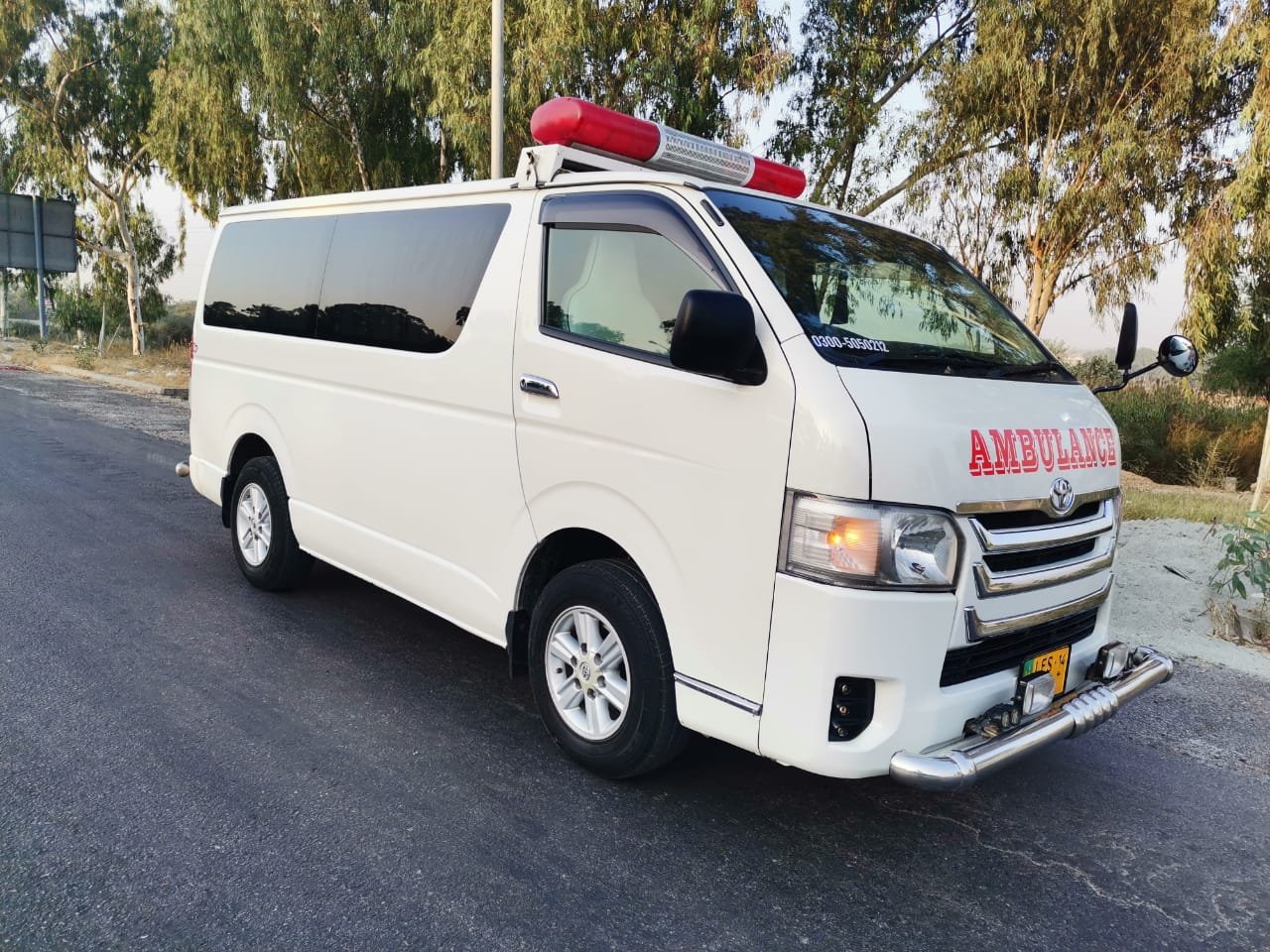
For a healthy and mobile person, travelling to a hospital in a private car may be relatively simple.
However, elderly and bedridden patients can have very different transportation needs.
A patient may:
- Be unable to walk
- Be unable to sit for a long period
- Require a stretcher
- Have limited mobility
- Be recovering from surgery
- Have suffered an injury
- Be physically weak
- Require oxygen support
- Need assistance getting into and out of a vehicle
- Need to travel for a hospital appointment
- Require transportation between hospitals
Trying to move such a patient without appropriate assistance can be difficult for family members.
A properly arranged patient transfer ambulance can provide a more suitable environment for transportation.
What Is a Patient Transportation Ambulance?
A patient transportation ambulance is designed to transport people who need additional assistance compared with ordinary passengers.
Depending on the service, an ambulance may provide:
- Patient stretcher
- Wheelchair access or assistance
- Oxygen availability
- Medical equipment
- Space for a family member or attendant, where permitted
- Medical assistance, depending on the ambulance type
- Safer positioning for patients who cannot sit normally
The exact facilities vary between ambulance providers and vehicle types.
Therefore, families should explain the patient’s condition before booking rather than assuming that every ambulance provides the same equipment or medical support.
Ambulance Service for Elderly Patients
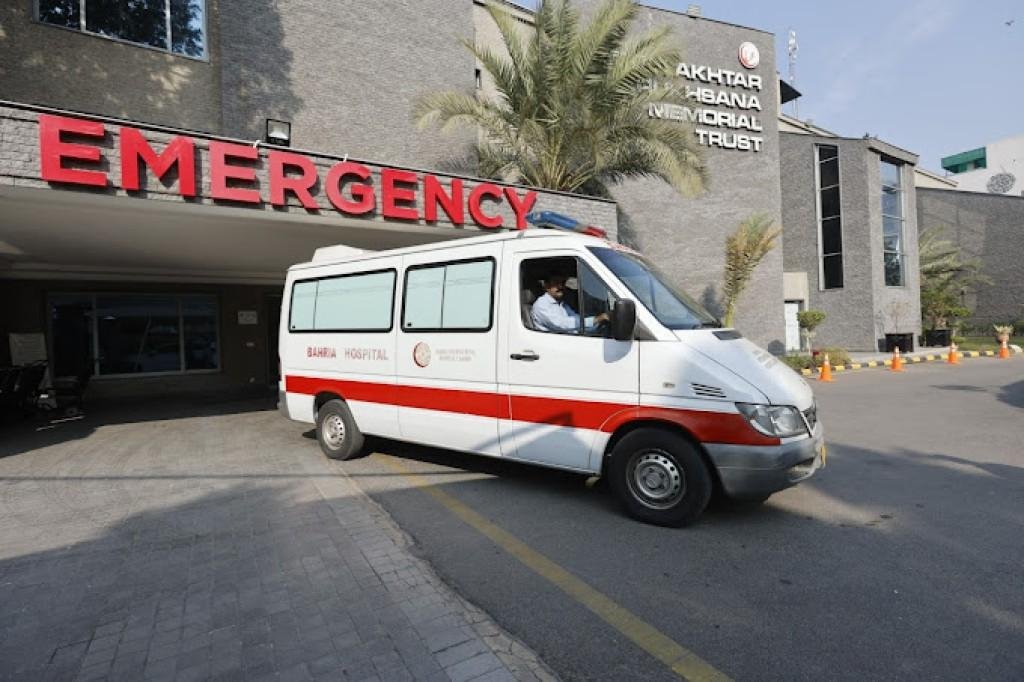
Older adults may require additional care during transportation.
An elderly person may have reduced mobility because of age, weakness, a previous injury, surgery, or another medical condition.
Even if the patient does not require emergency medical treatment, travelling in an ordinary car may be uncomfortable or difficult.
A private ambulance service in Pakistan may be considered when an elderly patient needs:
- Hospital transportation
- Doctor appointments
- Diagnostic tests
- Hospital admission
- Hospital discharge
- Transfer between healthcare facilities
- Long-distance medical transportation
- Stretcher transportation
Families should provide the ambulance provider with complete information about the patient’s mobility and medical requirements.
Ambulance for Bedridden Patients
A bedridden patient cannot normally travel in the same way as a healthy person.
The patient may need to remain in a lying position throughout the journey. Moving the patient from a bed to a normal vehicle can also be physically challenging.
A stretcher ambulance can be a more appropriate option when the patient cannot safely sit or walk.
Before booking an ambulance for a bedridden patient, ask:
- Is a stretcher available?
- Can the patient remain lying down during transportation?
- Is assistance available for moving the patient?
- Is oxygen available if required?
- Can medical staff accompany the patient if necessary?
- Is the ambulance suitable for the planned distance?
Providing these details before the ambulance arrives can help avoid delays.
Stretcher Ambulance Service in Pakistan
A stretcher ambulance service is particularly useful for patients who cannot sit or walk independently.
Stretcher transportation may be required for:
- Bedridden patients
- Post-surgery patients
- Patients with fractures
- Patients with serious injuries
- Elderly patients with limited mobility
- Patients recovering from major illness
- Patients being transferred between hospitals
A stretcher provides a designated surface for transporting the patient while lying down.
However, not every ambulance has identical stretcher arrangements, so availability should always be confirmed in advance.
Ambulance Service for Hospital Appointments
Not every ambulance journey is an emergency.
An elderly or bedridden patient may need transportation simply to attend a scheduled medical appointment.
For example, a patient may need to visit a:
- Hospital
- Specialist
- Diagnostic center
- Physiotherapy clinic
- Medical laboratory
- Rehabilitation facility
If the patient cannot safely travel in a normal vehicle, an ambulance may be considered for the appointment.
For scheduled journeys, booking in advance is generally preferable because it gives the ambulance provider time to arrange an appropriate vehicle.
Ambulance for Hospital Discharge
A common situation occurs when a patient has completed hospital treatment but is not yet physically capable of travelling home in a private car.
This may happen after:
- Surgery
- Fracture treatment
- Serious illness
- Extended hospital admission
- Stroke-related treatment
- Major injury
- Intensive medical treatment
A hospital discharge ambulance can provide transportation from the hospital to the patient’s home or another healthcare facility, depending on availability.
When arranging hospital discharge transportation, provide the expected discharge time and patient’s mobility requirements.
It is also useful to keep in contact with the hospital because discharge times can sometimes change.
Ambulance for Post-Surgery Patients
Patients recovering from surgery may need additional care while travelling.
Depending on the type of surgery and the doctor’s instructions, the patient may be unable to walk normally or sit comfortably for an extended period.
A family should ask the treating doctor what type of transportation is appropriate.
If ambulance transportation is recommended, tell the provider:
- What type of surgery the patient had
- Whether the patient can sit
- Whether a stretcher is required
- Whether oxygen is required
- Whether medical assistance is needed
- Where the patient is being picked up
- Where the patient needs to go
This information can help determine the appropriate transportation arrangement.
Ambulance for Wheelchair Patients
Wheelchair users may face challenges when travelling in standard vehicles.
Although some patients can transfer from a wheelchair to a car seat, others may not be able to do so safely.
Before booking an ambulance, explain the patient’s mobility situation.
Ask whether the vehicle can accommodate the patient’s wheelchair or whether the patient will need to be transferred to a stretcher.
The correct arrangement depends on the patient and the vehicle available.
Ambulance Service for Long-Distance Patient Transportation
Elderly and bedridden patients sometimes need to travel between cities for medical treatment.
A patient may need to travel from Islamabad to Lahore, Rawalpindi to another city, or between other locations in Pakistan for specialist care.
Long-distance patient transportation requires more planning than a short local trip.
Families should discuss:
- Total journey distance
- Expected travel duration
- Patient’s condition
- Stretcher requirements
- Oxygen requirements
- Medical staff requirements
- Rest or waiting arrangements
- Ambulance type
- Estimated charges
For a detailed guide to long-distance transfers, read:
This article can be internally linked to your existing intercity ambulance article.
Internal Link: Replace
INSERT-INTERCITY-BLOG-URLwith the actual published URL before publishing.
Ambulance Service in Islamabad for Elderly Patients
Families in Islamabad may require ambulance transportation for elderly relatives who cannot travel comfortably in an ordinary vehicle.
Common reasons include:
- Hospital visits
- Medical checkups
- Hospital admission
- Hospital discharge
- Specialist appointments
- Diagnostic tests
- Transfers to another hospital
- Home-to-hospital transportation
When searching for an ambulance service in Islamabad, families should look beyond the word “ambulance” and explain exactly what the patient needs.
For example, searching for an elderly patient ambulance in Islamabad or stretcher ambulance service in Islamabad may help families identify the type of service they need.
However, the provider should still be contacted to confirm the actual availability and facilities.
Ambulance Service in Rawalpindi
Patients in Rawalpindi may also require transportation to hospitals within the city or to healthcare facilities in Islamabad.
Because Islamabad and Rawalpindi are closely connected, hospital transfers between the two cities can be an important part of patient transportation.
When arranging an ambulance from Rawalpindi, provide the complete pickup address and destination hospital.
If the patient is bedridden, clearly mention that a stretcher is required.
If the patient needs oxygen or medical supervision, mention this before confirming the booking.
When Is an ICU Ambulance Necessary?
Not every elderly or bedridden patient requires an ICU ambulance.
An ICU or critical-care ambulance may be considered when a patient has significant medical support requirements during transportation.
For example, a critically ill patient may require continuous monitoring or other medical support.
The decision about the appropriate level of medical transportation should involve the treating healthcare team.
If an ICU-level ambulance is recommended, ask the provider about:
- Medical monitoring
- Oxygen support
- Available medical equipment
- Medical staff
- Stretcher facilities
- Route availability
- Long-distance capability
For more information, you can also link this article to your existing ICU and long-distance ambulance guide:
Internal Link: Replace the placeholder with the actual URL of your published article.
Emergency Ambulance for Elderly Patients
Age alone does not necessarily mean that an ambulance is required.
However, an elderly person experiencing a serious or sudden medical problem may require urgent medical assistance.
Examples can include:
- Serious injury
- Difficulty breathing
- Loss of consciousness
- Severe bleeding
- Major accident
- Sudden severe symptoms
In potentially life-threatening situations, contact the appropriate emergency medical service immediately.
Do not delay emergency medical treatment while searching for information online.
Private Ambulance vs Normal Car
Families often wonder whether they really need an ambulance.
The answer depends on the patient’s condition.
A normal car may be suitable for a patient who can sit comfortably, enter and exit the vehicle safely, and does not require medical support.
An ambulance may be more appropriate when the patient:
- Cannot walk
- Cannot sit safely
- Requires a stretcher
- Needs oxygen
- Requires medical supervision
- Has suffered a serious injury
- Is recovering from major surgery
- Needs hospital-to-hospital transportation
The treating doctor can provide guidance when there is uncertainty about the safest transportation method.
How to Book an Ambulance for a Bedridden Patient
Booking a patient transportation ambulance is easier when the family provides complete information.
Step 1: Provide the Pickup Address
Give the exact location where the patient will be collected.
If the location is a hospital, provide the hospital name and department or entrance information where relevant.
Step 2: Give the Destination
Tell the provider whether the patient is going to a hospital, clinic, diagnostic center, rehabilitation facility, or home.
Step 3: Explain Mobility
Clearly state whether the patient:
- Can walk
- Can stand
- Can sit
- Uses a wheelchair
- Must remain on a stretcher
- Is completely bedridden
Step 4: Explain Medical Requirements
Mention any known requirements such as oxygen, monitoring, or medical supervision.
Step 5: Confirm the Ambulance
Ask what type of ambulance will be sent and what facilities are available.
Step 6: Confirm the Price
Ask for the estimated cost before confirming the journey.
What Should Families Prepare Before the Ambulance Arrives?
A little preparation can make the transportation process smoother.
Keep the following items ready:
- Patient identification
- Medical reports
- Prescriptions
- Medication list
- Recent test results
- Doctor’s referral
- Hospital documents
- Emergency contact information
- Personal belongings needed during the journey
If the patient is being discharged from a hospital, keep the discharge documents ready.
What Information Should Be Given to the Ambulance Provider?
The more accurately you describe the patient’s requirements, the easier it is for the provider to determine an appropriate transportation option.
Important information includes:
Patient age:
Give the approximate or exact age when requested.
Mobility:
Explain whether the patient can walk, sit, stand, or requires a stretcher.
Medical condition:
Briefly explain the reason for transportation.
Oxygen requirement:
Tell the provider if oxygen support is required.
Pickup:
Give the exact pickup location.
Destination:
Provide the complete destination.
Journey type:
Explain whether it is an emergency, scheduled appointment, hospital discharge, or hospital transfer.
Distance:
For intercity transportation, provide both cities.
How Much Does an Ambulance Cost for Elderly Patients?
There is no universal ambulance price for elderly or bedridden patients.
The cost can depend on:
- Distance
- Ambulance category
- Stretcher requirements
- Medical equipment
- Medical staff
- Waiting time
- Intercity travel
- Special patient requirements
For this reason, families should request a journey-specific quotation.
A short local transfer may have different charges from a long-distance medical transfer.
How to Choose a Reliable Ambulance Service in Pakistan
When choosing an ambulance provider, do not focus only on price.
Consider:
Availability
Can the provider arrange transportation at the required time?
Ambulance Type
Is the vehicle suitable for the patient’s condition?
Stretcher
Is an appropriate stretcher available if required?
Medical Equipment
Can the provider supply the equipment the patient actually needs?
Medical Staff
If medical supervision is required, is appropriately trained staff available?
Distance
Can the ambulance cover the required local or intercity route?
Clear Pricing
Can the provider explain the expected charges before the journey?
These questions can help families make a more informed decision.
Frequently Asked Questions
Can an elderly person use an ambulance for a hospital appointment?
Yes. Ambulance transportation may be suitable for an elderly patient who cannot safely or comfortably travel in a normal car.
Can a bedridden patient travel by ambulance?
Yes. A stretcher ambulance may be appropriate for a patient who must remain lying down during transportation.
Can I book an ambulance for hospital discharge?
Yes, subject to availability. Families should provide the expected discharge time and patient’s mobility requirements.
Is an ambulance only for emergencies?
No. Ambulances can also be used for scheduled patient transfers, hospital discharge, medical appointments, and intercity transportation.
Can an ambulance take a patient from Rawalpindi to Islamabad?
Depending on availability, patient transportation between Rawalpindi and Islamabad may be arranged. Confirm the route and required ambulance type with the provider.
Can an ambulance transport a patient to another city?
Some ambulance providers offer intercity patient transportation. Always confirm the route, availability, equipment, and cost in advance.
Does every ambulance have a stretcher?
Ambulance facilities vary. If a stretcher is required, confirm this specifically before booking.
Can an ambulance provide oxygen?
Some ambulances may have oxygen facilities, but availability varies. Confirm before booking if oxygen is required.
How much does a patient transfer ambulance cost?
The cost depends on factors such as distance, ambulance type, equipment, staffing, and waiting time. Request a quotation based on the exact journey.
Fatima Ambulance for Patient Transportation
Families looking for an ambulance service in Pakistan may need different types of transportation depending on the patient’s condition.
Fatima Ambulance can be contacted to discuss available patient transportation options, including transportation for elderly patients, bedridden patients, hospital transfers, hospital discharge, and other medical transportation requirements.
When contacting the service, provide complete details about the patient’s condition, pickup location, destination, mobility, and any known medical requirements.
This helps the ambulance provider understand what type of transportation may be appropriate.
Conclusion
Finding the right ambulance service for elderly and bedridden patients requires more than simply finding a vehicle.
The patient’s mobility, medical condition, stretcher requirements, oxygen needs, journey distance, and level of medical support should all be considered before transportation is arranged.
Whether a patient needs an ambulance for a hospital appointment, hospital discharge, hospital-to-hospital transfer, or long-distance journey, clear communication with the ambulance provider can make the process easier.
For elderly, bedridden, or mobility-limited patients, families should always explain the patient’s exact needs before booking.
If you need patient transportation in Islamabad, Rawalpindi, or another location in Pakistan, contact Fatima Ambulance to discuss the available ambulance options for your specific journey.
Related Articles
Intercity Ambulance Service in Pakistan: Safe Patient Transfer Between Cities
Emergency Ambulance Service in Islamabad & Pakistan: When to Call an Ambulance
Private Ambulance Service in Islamabad: Patient Transfer, ICU & Long-Distance Ambulance